A client contacted me after finding Solving Your Mysteries through the Cumbria Archives website. They had already done substantial work on their ancestor James Forster, a nineteenth-century bookbinder with links to Lanercost, Carlisle, Glasgow and Doncaster, but one question remained stubbornly unresolved: who were James’s parents, and where was his baptism?
James Forster's missing early years
James was not an ancestor who simply disappeared from the records. In adulthood, there was a useful trail. His headstone gave a birth date of 19 May 1816. In the 1841 Scottish census he appeared as James Forrester, a bookbinder living in Glasgow with his wife Janet and their young family. Later English census returns placed him in Doncaster and gave his birthplace first as Carlisle and then, more specifically, Lanercost.
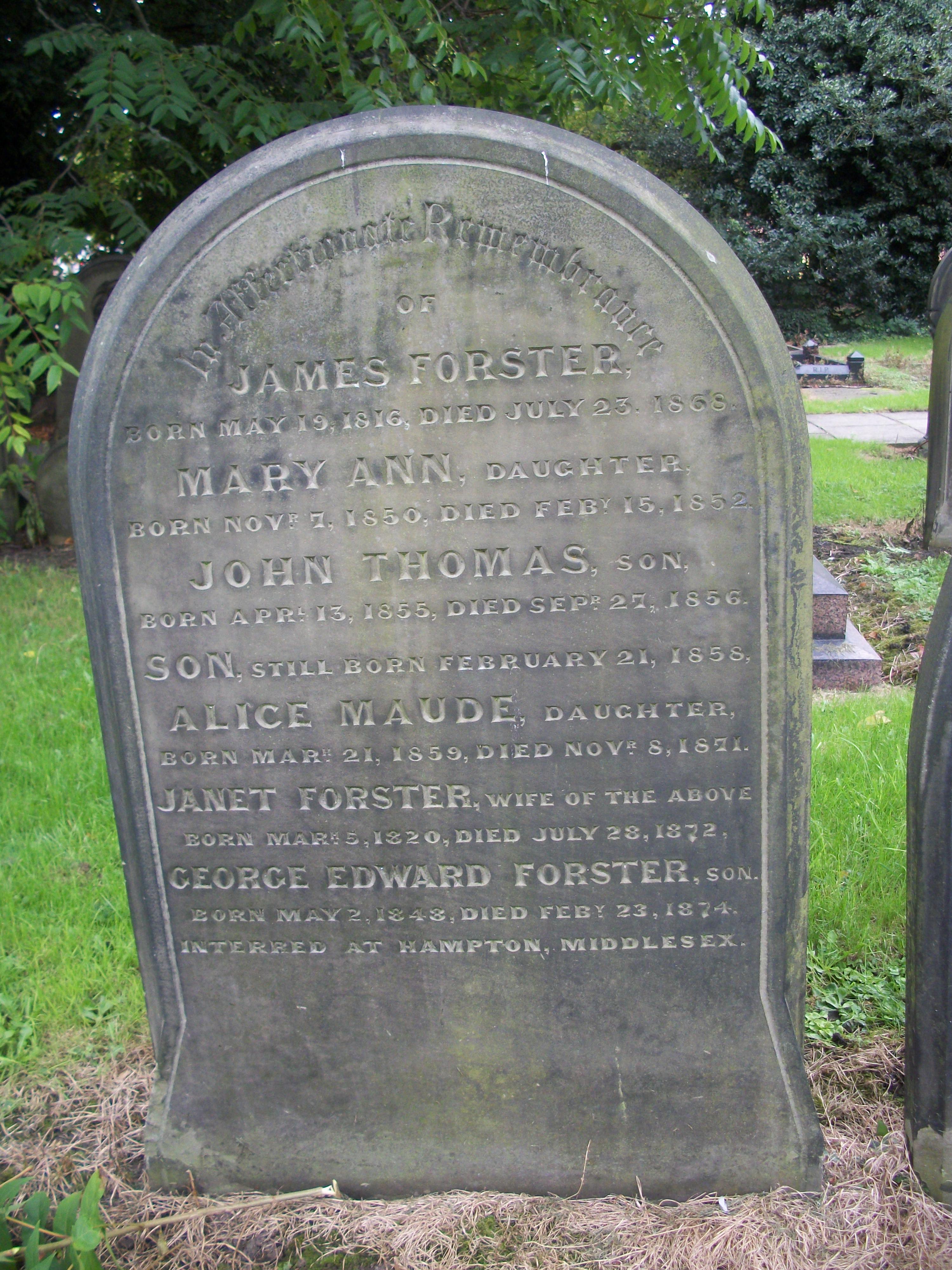
His later life therefore had shape, but his early life did not. No convincing birth or baptism for a James Forster could be found around 19 May 1816 in Lanercost or Carlisle, and the marriage of James and Janet also remained elusive. A newspaper death notice added another clue by saying that James had served his apprenticeship as a bookbinder under Charles Thurnam of Carlisle.

The task was not to build James’s entire family tree from scratch. It was to take the evidence already assembled by the client, avoid duplicating their work, and focus on the unresolved gap at the beginning of James’s life.
Starting with a research plan
I began by checking the major online sources and relevant parish material, including Ancestry, FamilySearch, ScotlandsPeople and indexes connected with Lanercost and Carlisle. I searched both the Forster name and spelling variants, and I also looked for the missing marriage.
The expected baptism never appeared under Forster. That absence became part of the problem to explain. James repeatedly gave the Carlisle/Lanercost area and a birth date around 19 May 1816, so I widened the search to children born there on the right date under other surnames.
The breakthrough at Cumbria Archives
I booked a research visit to Cumbria Archives so that I could examine material that was not giving us an answer online. Among the sources I checked was a printed Lanercost parish register.
There I found an entry that immediately stood out:
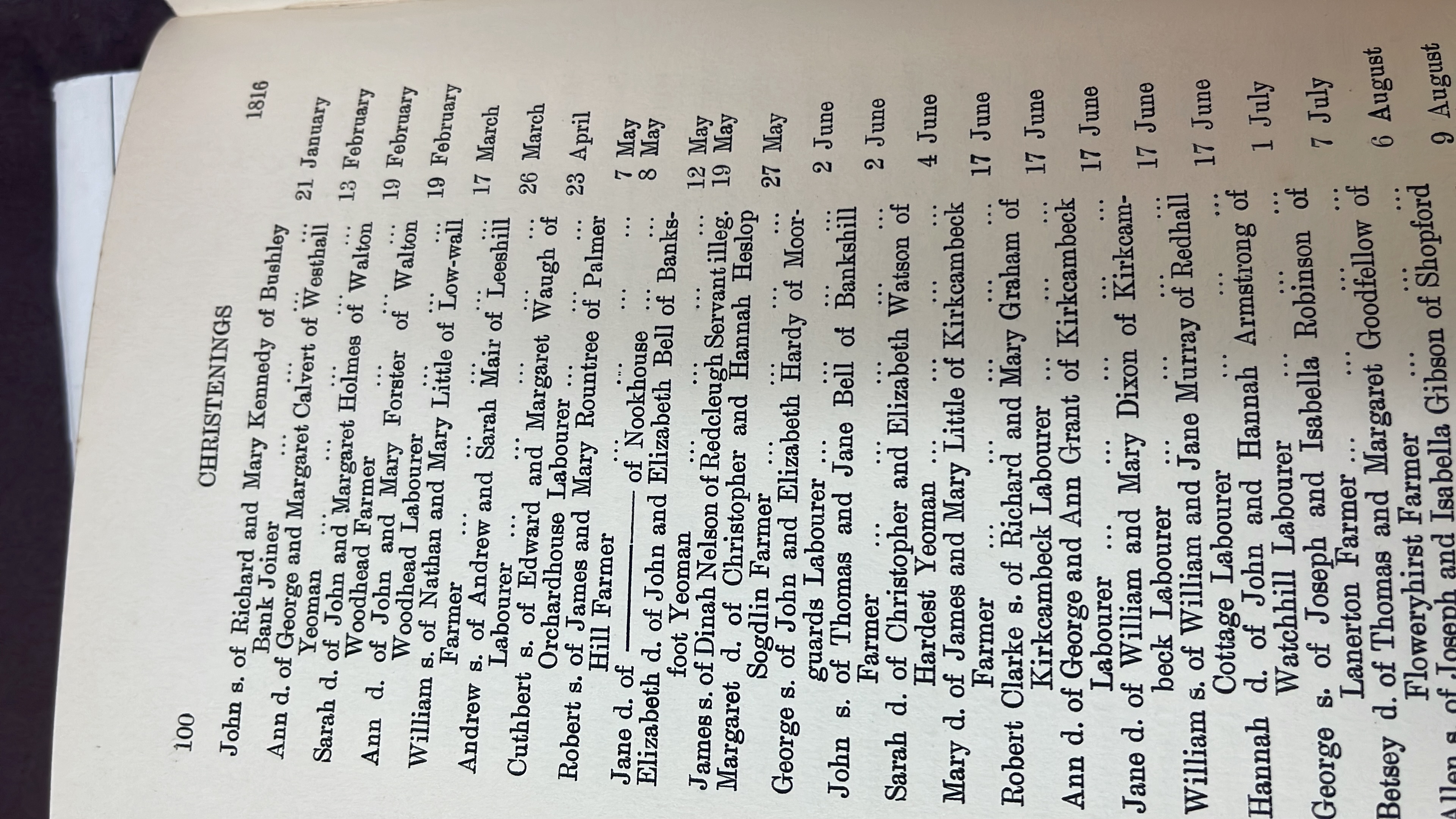
The entry recorded an illegitimate son named James, born to Dinah Nelson of Redcleugh, on the exact date later associated with James Forster. It was also in the parish James later identified as his birthplace.
One matching date is not enough, on its own, to prove identity. But genealogy becomes persuasive when several independent pieces of evidence begin pointing in the same direction.
Why the name “Nelson” mattered
The surname in the baptism was especially significant because “Nelson” had not vanished from James Forster’s family. At least two of his children carried it as a middle name: James Nelson Forster and Horatio Nelson Forster.
Middle names can preserve family surnames, commemorate relatives or record relationships that are not obvious from later records. In this case, the repeated use of Nelson became much more meaningful once a possible baptism for James himself appeared under that surname.
The client had already noticed the repeated use of Nelson in the family. The archive entry gave that name a possible origin: James may have carried his mother's surname forward as a middle name after he began using Forster.
Checking the Nelson theory
Once I had a plausible James Nelson, the next step was to try to disprove the theory as well as support it. I continued looking for a separate James Forster born at the right time and place, searched for James’s marriage under the Nelson surname, and investigated Dinah Nelson and the place named in the baptism.
The parish entry described Dinah as a servant “of Redcleugh”. I found a Red Clugh near Burtholme on an eighteenth-century map of Cumberland, although the name no longer appeared in the same way on later mapping. I also examined another Red Cleugh in the wider border area, but found no convincing connection there to the Nelson or Forster families.
I also found a possible 1847 death for a Dinah Nelson in Kendal Union Workhouse. The available details were insufficient to identify her as James's mother, so I kept the record as a lead for later work.
The apprenticeship clue
James’s obituary stated that he had been apprenticed to Charles Thurnam, the Carlisle printer and bookseller. An apprenticeship record could potentially have been extremely valuable because it might have recorded James’s name before he became established as Forster, or named a parent or guardian.
I investigated surviving material connected with Thurnam at the archives. Unfortunately, the indentures I found had been printed by Thurnam rather than being records of his own apprentices, and I could not locate a surviving apprenticeship document for James.
This is an important part of professional research: not every promising avenue produces a document. Recording what was searched, what survives and what did not answer the question helps prevent the same unproductive searches being repeated later.
The case for James Nelson and James Forster
I could not prove James Forster’s parentage, and I could not establish why or exactly when he began using the surname Forster. One possibility is that Forster was connected with his biological father, but I found no documentary evidence that would justify naming a particular man.
What I could say was that the evidence made a strong case that the James Nelson baptised at Lanercost on 19 May 1816 and the later bookbinder James Forster were the same person:
- The baptism date exactly matched the date associated with James Forster.
- The baptism took place in Lanercost, the birthplace James later gave in the census.
- No convincing baptism for a separate James Forster could be found in the expected place and period.
- “Nelson” reappeared as a middle name among James Forster’s children.
- Searching under Nelson provided an explanation for why the expected Forster baptism was missing.
Taken together, those details make a strong identity argument. The unanswered part is James's parentage: the evidence points to Dinah Nelson as his mother, while his biological father is still unknown.
Where DNA may help next
The documentary evidence created a much better working hypothesis, but it did not identify James’s biological father. For an illegitimate birth in this period, surviving parish, poor-law, settlement, bastardy or overseers’ records can sometimes provide an answer, but survival varies and no such document had yet been found in this case.
DNA is therefore a particularly useful next step. Matches descending from Dinah Nelson’s wider family could help test the maternal side of the theory, while clusters of unexplained matches might eventually point towards the paternal line. I have used DNA successfully in other illegitimate and unknown-parentage cases where the paper trail could only take the research so far.
What changed after the archive visit
The archive search changed the direction of the case. The exact birth date from James's later records led to a Lanercost baptism under Nelson, and the same surname appeared again as a middle name in the next generation. The repeated failure to find a separate James Forster baptism now had an explanation worth testing.
The case still has an open question. No document found in this stage names James's biological father, and the point at which he adopted the surname Forster remains uncertain. The useful result was a stronger, better-supported identity for James's early life and a much more focused set of records and DNA matches to investigate next.
When a Cumbrian ancestor changes name or disappears
Cases like this are often solved by combining what a family already knows with local archive material, mapping, newspapers, parish registers and careful comparison of names, dates and places. I have extensive experience working in Cumbria Archives and researching families across historic Cumberland and Westmorland.
If you have an ancestor whose origins do not quite fit the records, a surname that changes unexpectedly, or a family line that has resisted online searching, you are welcome to send me an enquiry. I can assess the evidence you already have and suggest the most useful next step.