Henry Logan was born in Kentucky on 10 December 1837, but the earliest record I have found for him is almost eighteen years later and hundreds of miles to the north. In the 1855 New York State census, Henry appears alongside his brother Speed Smith Logan. Six years later, both men were in Canada. The records follow Henry there for the rest of his life, but they do not explain what brought the brothers north, who Henry's mother was, or exactly how their early lives in Kentucky fit into the wider Logan family.
Henry's records begin hundreds of miles from Kentucky
From 1855 onwards, Henry can be followed with unusual consistency. Census after census gives him a place in the historical record. The difficulty lies before that first appearance. I do not yet have a childhood record that names his parents, and the Kentucky family I believe he belonged to contains another man called Henry Logan of almost the same age.
That combination creates the kind of problem that is common in nineteenth-century Black genealogy: the later evidence may be relatively strong while the generation before emancipation becomes fragmented, indirect or completely silent.
The first record: Henry and Speed Logan in New York, 1855
The first documentary record I currently have for Henry is the 1855 New York State census. Henry and his brother Speed Smith Logan appear together in the same household. Both are recorded as servants, and the entry places Henry's origins in Kentucky.

The racial terminology in nineteenth-century census records needs to be handled carefully. Across the records I have found for Henry, enumerators repeatedly placed him in categories then used for people regarded as Black or mixed-race, including the abbreviation “M” for the historical term “mulatto”. These labels are evidence about how officials classified Henry; they should not be treated as a complete description of how Henry understood his own identity.
Repeated racial classifications across several censuses also help distinguish Henry from the other man of nearly the same name and age in the wider Logan family.
Free in New York did not necessarily mean safe
By the time Henry appears in New York in 1855, slavery had been legally abolished in the state for nearly three decades. New York's final legal abolition took effect in 1827. Yet this does not mean that Black people in the northern states lived without danger.
The federal Fugitive Slave Act of 1850 required enforcement even in free states, and contemporary federal law placed alleged freedom seekers at serious risk of capture. The Library of Congress notes that the law threatened free as well as enslaved Black people because an accusation of fugitive status could itself be dangerous.
The Fugitive Slave Act is relevant to the world in which Henry and Speed were moving, though I have found no record stating that either brother escaped slavery, used the Underground Railroad or went to Canada because of the Act. Their personal reason for moving remains undocumented.
By 1861, the brothers were in Canada
Six years after the New York census, Henry and Speed appear in Canada. Henry's 1861 census entry records him as a labourer and Baptist. His brother Speed appears nearby as a farmer. This is the beginning of a long Canadian paper trail for Henry.
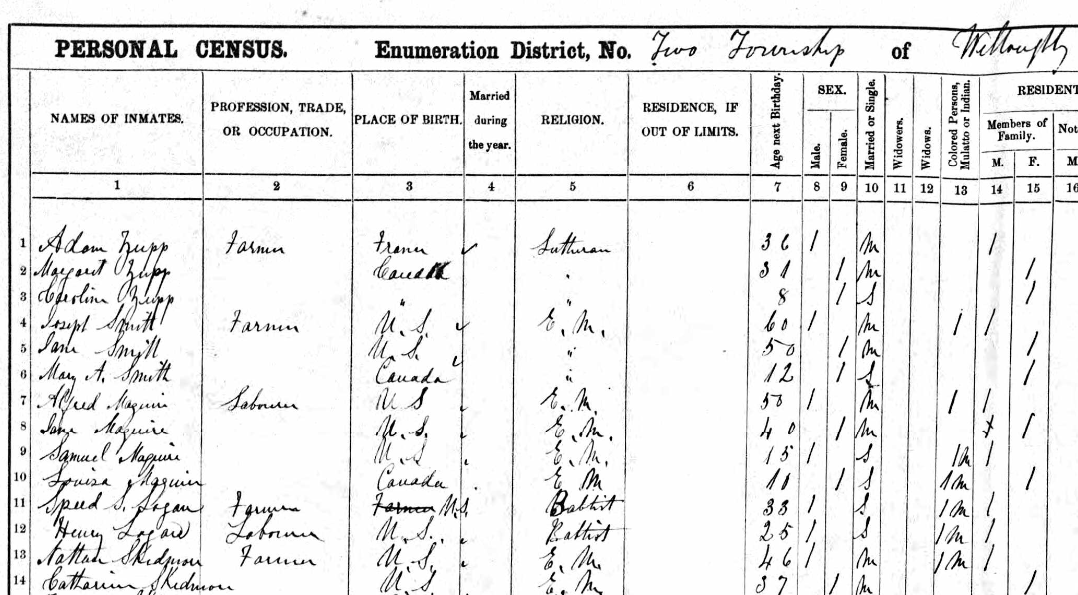
Canada offered a very different legal position. Slavery had been abolished across most of the British Empire in 1834, and thousands of African Americans crossed into British North America during the decades before the American Civil War. The Government of Canada describes Canada as a destination for African Americans seeking freedom from slavery, especially after the 1850 Fugitive Slave Act made the northern United States less secure.
Safety, work, family connections and economic opportunity are all plausible reasons for the move into Canada. At present, the records do not identify which of them mattered to Henry and Speed.
A Canadian life that lasted more than sixty years
Henry remained in Canada for the rest of the documentary trail I have found. He appears in Canadian censuses from 1861 through 1921, and the records repeatedly identify him within the racial categories then used for Black or mixed people. His religion is consistently recorded as Baptist.
The records suggest that Henry's wife was white, although I still regard that part of the reconstruction as provisional and would want stronger documentation before treating it as settled.
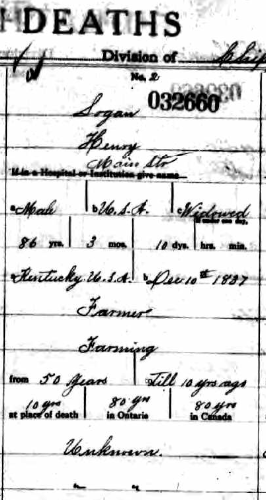
Henry died in 1924. His death record closes a paper trail that stretches from the 1855 New York census through more than six decades in Canada.
The Kentucky connection: Jesse Logan
The harder part of the case is working backwards from Henry towards Kentucky. I believe his father was Jesse Logan, born in Kentucky about 1807. Jesse had a wife and a documented family with several children — including, confusingly, another son called Henry, born about 1836.
The wider family contains another Henry Logan born within roughly a year of him. Any record for a Kentucky-born Henry of that age has to be checked against race, relatives, location and later movements before it can be assigned to either man.
DNA places Henry within the wider Logan family
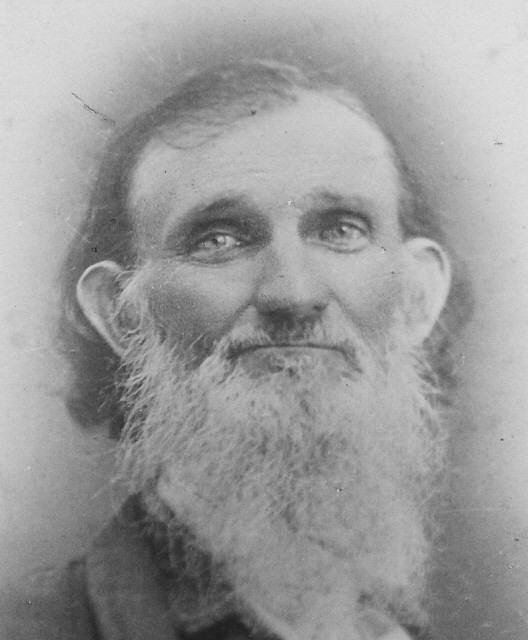
The strongest reason I know I am working in the correct Logan family comes from DNA. Genetic matches connect Henry's descendants with the wider Logan family in a way that the surviving nineteenth-century documents alone do not.
DNA does not magically supply the missing birth record. It also does not, by itself, tell me who Henry's mother was. What it can do is establish that a documentary hypothesis is pointing towards the correct biological family and help separate that question from the confusion created by two similarly aged men with the same name.
The brother network may hold the next clue
Henry was not the only brother whose movements matter. Speed Smith Logan travelled north with him and remained an important part of the story. A third brother, Reuben Logan, is much less well documented.
When an ancestor's own early records are missing, siblings can become essential substitute evidence. A marriage, death, church entry, land record or newspaper notice for Speed or Reuben might name a parent or birthplace more precisely than Henry's records do. Their descendants may also carry DNA evidence that helps divide the paternal and maternal sides of the family.
The biggest unanswered question: who was Henry's mother?
This is the part of the case I most want to solve. I do not currently know Henry's mother's name, and I cannot yet say whether Henry, Speed and Reuben shared the same mother.
That uncertainty matters because the Logan surname may tell only part of the story. If Jesse Logan was their father but the brothers were born to a woman who is poorly represented — or not named at all — in surviving records, then the maternal line may require a completely different set of sources and a different DNA strategy.
It is also one reason I am cautious about trying to reconstruct Henry's childhood from the documented household of Jesse Logan. The presence of another son called Henry in that family is not a detail to explain away. It is evidence that the family structure was more complicated than the surviving records immediately reveal.
Why African American genealogy before 1870 can become so difficult
Researching Black and mixed-race families in the United States before emancipation can become exceptionally difficult because the record system itself was unequal. Enslaved people were often recorded without surnames or even without individual names in records created by enslavers, while free Black people could appear inconsistently across census, tax, court, church and local records.
For a family like Henry's, the research therefore has to move beyond a straightforward search for a birth certificate. Kentucky county records, probate and estate papers, deeds, tax material, court records, Baptist church records, records relating to free people of colour or enslavement, and the records of the wider Logan family may all eventually contribute pieces of the answer.
DNA is particularly valuable in this kind of case because genetic relationships can survive where the documentary trail does not. But it works best when paired with careful cluster research into siblings, cousins, neighbours and associated families rather than used as a shortcut around the records.
Where the evidence stands now
Henry is securely documented in New York in 1855 with Speed Smith Logan and in Canada from 1861 onwards. Later records consistently place his birth in Kentucky in 1837 and repeatedly classify him using the period's Black or mixed-race census categories.
DNA connects Henry's descendants with the wider Logan family in Kentucky, which is why Jesse Logan remains my leading candidate for his father. The direct documentary link is still incomplete, Henry's mother has not been identified, and I do not yet know whether Speed and Reuben shared the same mother.
The reason for the brothers' northward migration is also open. The legal and political climate of the 1850s makes the route historically significant, but no surviving record I have found states their motive.
What has become important in this case
The unresolved parts of Henry's story have changed where the research needs to look. Speed and Reuben are now central research subjects because their records may name relatives Henry's do not. The second Henry in Jesse Logan's documented household also means that every same-name record has to be identified with unusual care.
DNA has been most useful as a way of placing Henry within a wider biological family. The next task is to separate matches from the established Logan side from those that may belong to his unknown maternal family, while county records in Kentucky are searched for the documentary connection.
The next searches in Kentucky and in the DNA matches
The next phase would concentrate on Kentucky. I would build out Jesse Logan's wider family, associates and locations in detail, then search county-level probate, deed, tax, court and church material alongside records relating to Black residents, free people of colour and enslavement where those collections survive.
I would also treat Speed and Reuben as research subjects in their own right rather than supporting characters in Henry's story. Their marriages, deaths, church affiliations, land records and descendants may hold the clue that identifies the brothers' mother.
On the DNA side, the priority would be to separate matches attributable to the established Logan line from matches that may belong to Henry's unknown maternal family. As more descendants test, that distinction may become much clearer.
Researching a family line that becomes difficult before the Civil War
Some family-history problems cannot be solved by searching one more census or trying another spelling. They require a combination of documentary research, historical context, sibling and associate research, and sometimes DNA.
If you are trying to reconnect a family across missing records, uncertain parentage, migration or a difficult nineteenth-century paper trail, you are welcome to send me an enquiry. I can review the evidence you already have and identify the most useful documentary or DNA route forward.